

SINHA CLASSES
8802138887
1. Suppose the GDP at market price of a country in a particular year was ₹ 1,100 crore. Net Factor Income from Abroad was ₹ 100 crore. The value of Indirect taxes and subsidies were ₹ 200 crore and ₹ 50 crore respectively. If the National Income was ₹ 850 crore, find the aggregate value of depreciation.
2. Net National Product at Factor Cost of a particular country in a year is ₹ 1,900 crore. There are no interest payments made by the households to the firms/government, or by the firms/government to the households. The personal disposable income of the households is ₹ 1,200 crore. The personal direct taxes paid by them is ₹ 600 crore and the value of retained earnings of the firms and government is valued at ₹ 200 crore. What is the value of transfer payments made by the government and firms to the households?
3. The value of the Nominal GNP of an economy was ₹ 2,500 crore in a particular year. The value of GNP of that country during the same year, evaluated at the prices of same base year, was
₹ 3,000 crore. Calculate the value of the GNP deflator if the year in percentage terms. Has the price level risen between the base year and the year under consideration?
4. In a single day Raju, the barber, collects ₹ 500 from haircuts; over this day, his equipment depreciates in value by ₹ 50. Of the remaining ₹ 450, Raju pays sales tax worth ₹ 30, takes home ₹ 200 and retains ₹ 220 for improvement and buying of new equipment. He further pays ₹ 20 as income tax from his income. Based on these informations, complete Raju's contribution to the following measures of income:
a). Gross Domestic Product
b). NNP at Market Price
c). NNP at Factor Cost
d). Personal Income
e). Personal Disposable Income.
5. If Domestic Factor Income is ₹ 200 crore and National Income is ₹ 190 crore, how much will be the Net Factor Income from Abroad?
6.

7.
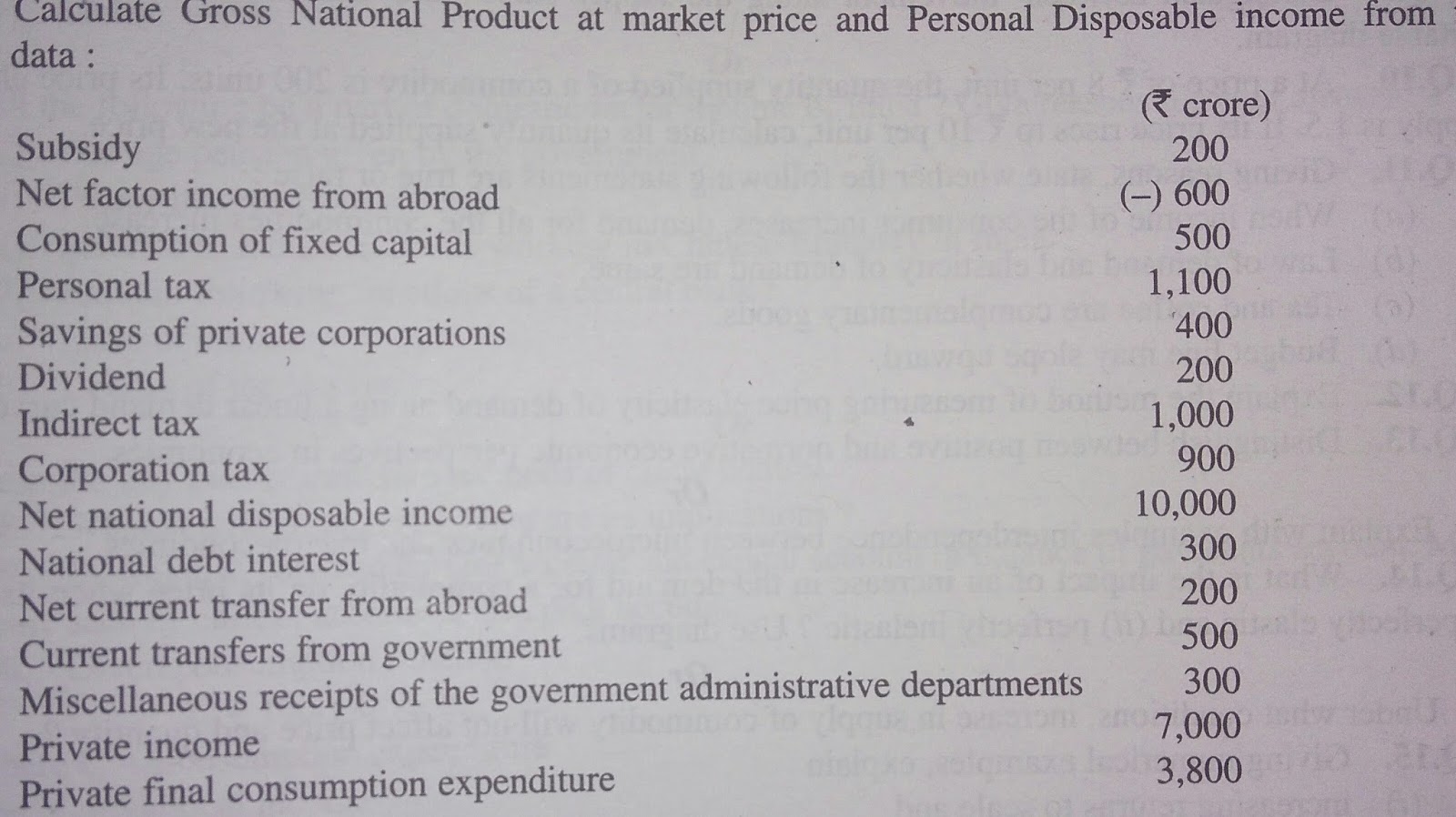
8.

9.

10.

For more questions click:
http://sinhaclasses.blogspot.in/2018/02/cbse-class-12-economics-important.html?m=1
8802138887
1. Suppose the GDP at market price of a country in a particular year was ₹ 1,100 crore. Net Factor Income from Abroad was ₹ 100 crore. The value of Indirect taxes and subsidies were ₹ 200 crore and ₹ 50 crore respectively. If the National Income was ₹ 850 crore, find the aggregate value of depreciation.
2. Net National Product at Factor Cost of a particular country in a year is ₹ 1,900 crore. There are no interest payments made by the households to the firms/government, or by the firms/government to the households. The personal disposable income of the households is ₹ 1,200 crore. The personal direct taxes paid by them is ₹ 600 crore and the value of retained earnings of the firms and government is valued at ₹ 200 crore. What is the value of transfer payments made by the government and firms to the households?
3. The value of the Nominal GNP of an economy was ₹ 2,500 crore in a particular year. The value of GNP of that country during the same year, evaluated at the prices of same base year, was
₹ 3,000 crore. Calculate the value of the GNP deflator if the year in percentage terms. Has the price level risen between the base year and the year under consideration?
4. In a single day Raju, the barber, collects ₹ 500 from haircuts; over this day, his equipment depreciates in value by ₹ 50. Of the remaining ₹ 450, Raju pays sales tax worth ₹ 30, takes home ₹ 200 and retains ₹ 220 for improvement and buying of new equipment. He further pays ₹ 20 as income tax from his income. Based on these informations, complete Raju's contribution to the following measures of income:
a). Gross Domestic Product
b). NNP at Market Price
c). NNP at Factor Cost
d). Personal Income
e). Personal Disposable Income.
5. If Domestic Factor Income is ₹ 200 crore and National Income is ₹ 190 crore, how much will be the Net Factor Income from Abroad?
6.
7.
8.
9.
10.
For more questions click:
http://sinhaclasses.blogspot.in/2018/02/cbse-class-12-economics-important.html?m=1


